


We had the opportunity to sit down with John from The Overland Syndicate and talk overlanding, our shared love of Toyotas, and his video series, "Back to the Basics." In this issue we cover the injuries you're most likely to face on the trail, how to prepare for them, and — more importantly — how to avoid them.
- Most injuries on the trail are avoidable. Practice safety and common sense, and be prepared.
- Burns, cuts, and bad water are the top three trip-enders.
- You can build a solid first aid kit for under $20.
- Use PACE planning for medical capability.
- A preventable injury should never be the reason your trip ends early.
Introduction
We were all young once, and immortal. Gone are the days of through-hiking the Appalachian Trail with nothing but Crocs, a duct-taped water bottle, and a gas-station burrito. A little forethought and preparedness go into our excursions nowadays. This article is geared toward those just starting their overlanding journey who want to be more proactive about safety and first aid capability.
There's a lot of snake oil on the internet these days. But after reading this, you should be able to walk into any dollar store or large chain drugstore and walk out with a decent DIY medical kit for around $20.

Common medical issues while overlanding: lacerations, burns, and bad water
Despite an abundance of caution, you or someone in your group will likely pick up a cut, scrape, gash, tear, avulsion, laceration, burn, scald, contusion, fracture, dysentery — you get the idea. Any of these can end a trip early. Prevention is ideal, but if an accident does happen, simple first aid keeps it from spiraling into a miserable experience.
To treat these, you'll need basic first aid training and some simple supplies. We recommend classes through the Red Cross or your local park district, and a Stop the Bleed class. Advanced training is offered through many institutions, including the National Outdoor Leadership School. If you're a licensed healthcare provider, the sky's the limit through continuing education.
Lacerations and abrasions
For the full treatment approach, reference our field guide to wound care. For supply, we recommend:
- Clean water to irrigate the wound.
- Gauze to apply direct pressure and stop bleeding from minor lacerations or abrasions.
- Bandages in a variety of sizes and materials — enough to treat minor injuries and change once a day.
- Extra gauze pads. Spend a little more for non-adherent pads.
- Medical tape to secure a larger dressing. We love classic "silk" medical tape for its multi-use role and configurability.
All of these items can be found at large drugstores like Rite Aid, Walgreens, CVS, or even ABC (mahalo!).
Burns
For the full treatment approach, see our field guide to thermal injuries. For supply, we recommend:
- Clean water to cool and clean the burn.
- A burn gel. (A reasonable option is available from CVS.)
- Some type of non-adherent gauze.
- A gauze roll or elastic bandage (ACE wrap) to secure a larger dressing. Dual purpose: the elastic bandage also works for sprains.
- Cravats are multipurpose, wearable medical assets. Use them to sling an injured arm, secure a large bandage, pack a wound in extremis, cover your head from the sun, filter particulate as a mask, soak with water to cool your neck, filter water, and more — limited only by your imagination. A woven triangular bandage (Dynarex) is an inexpensive single-use option (a 12-pack runs about $8), or go all-out with a purpose-built NAR product. Muslin is cheap and easy to find, or consider a classic shemagh.

Bad water
We strongly suggest investing time in learning to source and purify water for drinking, cooking, bathing, and yes, medical use. It's one of the single best skills for avoiding unnecessary trip interruptions.
Head over to CANA Provisions for videos, free help building your water plan, and resources to keep dysentery from ending your trip.

Prevention is the best cure
Be careful out there. When you're tired and dehydrated, you're more likely to make mistakes and overestimate your ability. Avoid both conditions wherever possible.
- Wear work gloves when using tools to protect your hands.
- Exercise extreme caution and wear all the protective gear — goggles, gloves, chaps — when using power tools, especially chainsaws if you're cutting new trail. Know your tools and how to use them. It sounds basic, but the knife handling you learned in Cub Scouts (or that Kali class ten years ago) may prevent an early end to your trip.
- Use the proper safety equipment when working on your rig. Chock those wheels. Set the jack on solid, level ground with a fail-safe under the frame. Use the buddy system, and never get under your vehicle alone. Know your rig and how to perform emergency field maintenance.
- Water is king. We can't stress enough the importance of clean, potable water. If your rig is big enough, you may be able to pack what you need — but the knowledge, experience, and a plan for sourcing and purifying your own water is a huge force multiplier.
PACE yourself
PACE stands for Primary, Alternate, Contingency, and Emergency. Your medical resources should be scalable and layered — and you can build a PACE plan for almost everything.
Primary: what lives on your rig. Store it all in one location, make it easily identifiable, and make sure everyone knows where it is, what's in it, and how to use it properly.
Alternate: a backup. Think about what you can keep on your person or in your day pack for the hike up the hill to get that perfect shot — smaller than your primary, but robust enough to handle minor injuries. We happen to make these things called FIELD KITS, but this is not an ad.
Contingency: ideally, everyone in your group is similarly outfitted. Even a simple homemade boo-boo kit in each person's rig can save the day. There's strength in numbers, and getting on the same page with your overlanding buddies before a trip pays dividends when something happens.
Emergency: we love improvisational medicine — it's kind of our thing. But improvisation is not the standard of care, and you should not rely on it as your primary plan. Carry professional, purpose-built equipment whenever you can, and treat improvised solutions as a last resort for when better options are exhausted. If you fail to plan, you plan to fail.
More From Field Notes
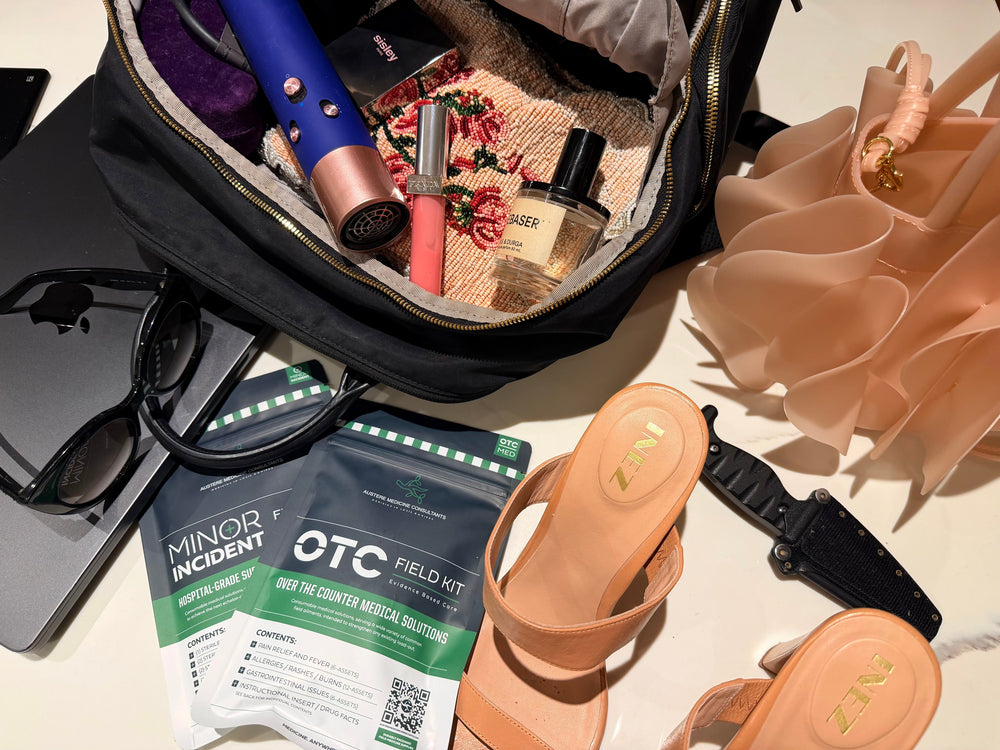
The Physician's Travel Medicine Kit List: What to Pack for Domestic, International, and Expedition Travel.
A physician's travel medicine kit list in three tiers: everyday, international, and austere. What to pack, what needs a prescription, and how to travel with it legally.
Read Article
Tele-Mentorship: Extending (and maintaining) the Standard of Care
Not Medical Advice The following discussion is educational and is not medical advice. It does not imply a physician-patient relationship, nor is anything discussed herein intended to advocate for any specific medical treatment or...
Read Article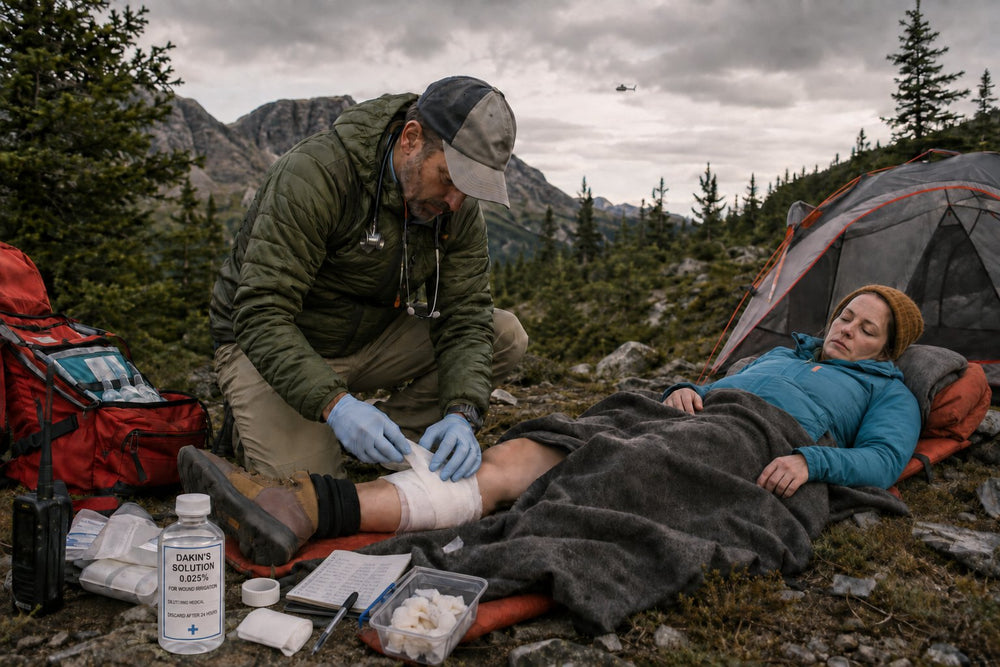
Wound Care in Austere Environments: A Framework
Cleaning, dressing, debridement, and Dakin's solution when evacuation is measured in days; a prolonged casualty care framework.
Read ArticleMedicine. Anywhere.
Austere Medicine Consultants brings hospital expertise and capability to the field. Explore physician-built kits engineered for the moments that matter.
Shop the Kits