

Introduction
It is easy to take basic healthcare for granted in America. We benefit from modern facilities, advanced medical technology, highly educated and well-trained physicians, and a robust supply chain for pharmaceuticals and medical supplies. But there are situations and environments where traditional healthcare is a luxury and practitioners must adapt to suboptimal conditions. Enter the concept of austere medicine: an ever-developing field that poses a unique set of challenges for clinicians providing care in remote, resource-limited, contested, or disaster-stricken areas. This article explores austere medicine's origin story, its principles, and why it is a crucial field in today's global landscape.

A tale as old as time
As is often the case with technology — and even medical practice — war is a stimulus for adaptation and innovation. For centuries, physicians, nurses, and medics have worked near the battlefield, tending to the wounded and to displaced civilians. Refugees are often subject to harsh living conditions without access to resources, yet still require routine and emergency healthcare. Natural disasters, and humanity's impulse to explore the rugged and untamed wilderness, created a need for "Medicine. Anywhere." The roots of austere medicine go back very far indeed.

Modern development
While we cannot verify who first coined the term "austere medicine," retired Green Berets Rich Mason, Clint Bearden, and Jay Stanka — along with Caitlyn Mason of the Direct Action Resource Center — pioneered training using live tissue and realistic immersion into war-zone and disaster scenarios. Their classes were sponsored by leading academic and commercial entities and attended by several physician specialties. The Direct Action Resource Center remains one of the nation's leading training centers for military and law enforcement, and offers select classes to civilians.
Today the U.S. military is likely the leading innovator in field medicine, and a growing number of companies and institutions offer training in wilderness, remote and offshore, and austere medicine. Organizations like Doctors Without Borders (Médecins Sans Frontières) bring medical expertise and compassionate care to conflict zones and areas stricken with endemic disease.

What is the essence of austere medicine?
Austere medicine is a specialized branch of medicine focused on providing care in challenging, resource-constrained, or emergency situations. Its practice demands adaptability, ingenuity, and the ability to deliver essential healthcare with limited resources. Practitioners often work in remote areas, disaster zones, conflict zones, or on expeditions, where traditional medical infrastructure is unavailable or inadequate.
Our company, Austere Medicine Consultants, strongly advocates for maximizing — to the extent possible — hospital-grade care in the field to drive positive patient outcomes.
The principles of austere medicine
- Resourcefulness: practitioners are experts at making the most of what's available. They must improvise with limited supplies, using creativity to solve medical problems.
- Adaptability: flexibility is key. Clinicians must be prepared to handle a wide range of medical issues and adapt their approach to the unique circumstances they encounter.
- Prioritization: with limited resources, austere medicine prioritizes life-saving interventions. Practitioners must determine the most critical needs and allocate resources accordingly.
- Training and education: professionals seek out and master specialized training that equips them with a broad range of skills — from basic first aid to surgical procedures — to meet the diverse needs of their patients.

Why is austere medicine important?
- Disaster response: in the aftermath of earthquakes, hurricanes, or tsunamis, first responders often find themselves essentially practicing austere medicine. Their ability to provide life-saving care in chaotic, resource-scarce environments can significantly reduce casualties.
- Humanitarian aid: in conflict zones and regions affected by humanitarian crises, access to traditional healthcare may be limited or non-existent. Austere medicine teams play a crucial role in delivering care to vulnerable populations.
- Remote areas: remote and isolated communities — rural regions or expeditions far from facilities — may lack access to medical care. Austere medicine practitioners bridge that gap.
- Preparedness: austere medicine training is valuable not only for professionals working in challenging environments, but for anyone seeking to be self-reliant in an emergency. Basic knowledge can save lives in unexpected circumstances.
Conclusion
Austere medicine is a testament to the resilience and adaptability of healthcare professionals dedicated to serving communities in the most challenging circumstances. Whether responding to natural disasters, providing aid in conflict zones, or ensuring healthcare in remote areas, it is an essential field that embodies the core principles of resourcefulness, adaptability, prioritization, and education. It is a reminder that, even in the harshest conditions, the indomitable human spirit finds ways to heal, comfort, and preserve life — and to practice "Medicine. Anywhere."
About Austere Medicine Consultants
Austere Medicine Consultants endeavors to bring hospital expertise and capability to the field. In the year ahead, we will roll out multiple service lines to further this important mission. Contact us to learn more.
More From Field Notes

The Physician's Travel Medicine Kit List: What to Pack for Domestic, International, and Expedition Travel.
A physician's travel medicine kit list in three tiers: everyday, international, and austere. What to pack, what needs a prescription, and how to travel with it legally.
Read Article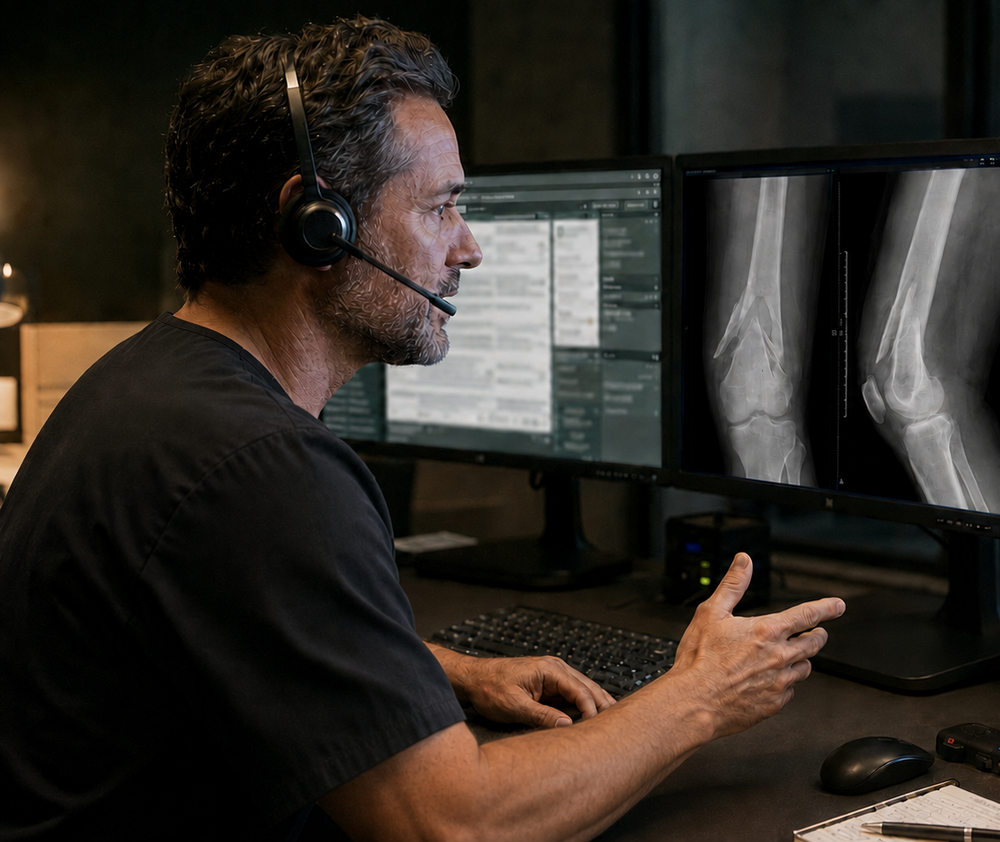
Tele-Mentorship: Extending (and maintaining) the Standard of Care
Not Medical Advice The following discussion is educational and is not medical advice. It does not imply a physician-patient relationship, nor is anything discussed herein intended to advocate for any specific medical treatment or...
Read Article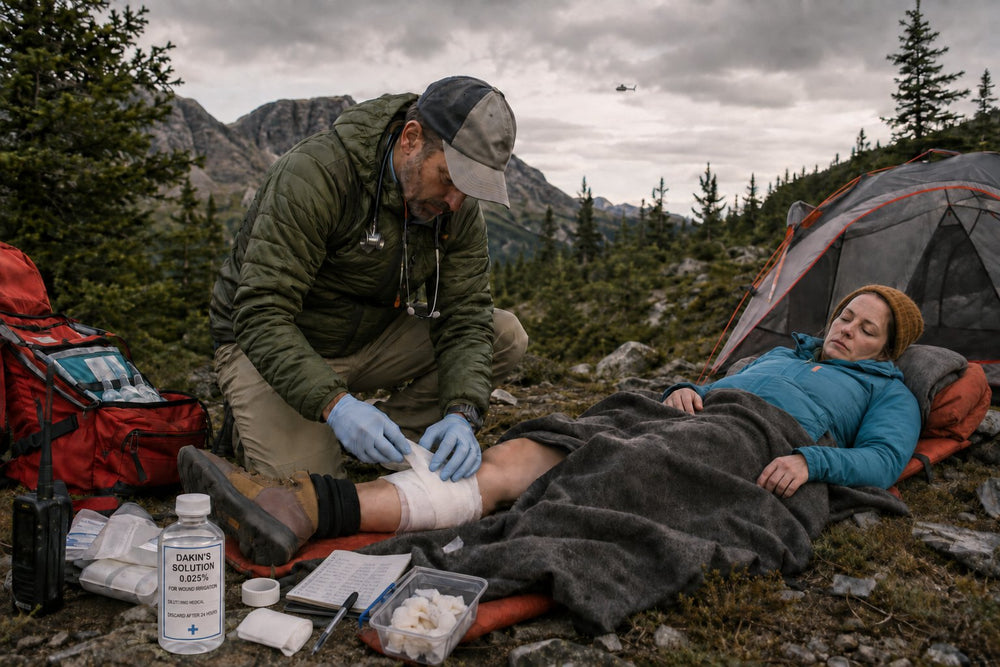
Wound Care in Austere Environments: A Framework
Cleaning, dressing, debridement, and Dakin's solution when evacuation is measured in days; a prolonged casualty care framework.
Read ArticleMedicine. Anywhere.
Austere Medicine Consultants brings hospital expertise and capability to the field. Explore physician-built kits engineered for the moments that matter.
Shop the Kits