

This article is provided for general educational and organizational-planning purposes. It does not constitute individualized medical advice, legal advice, regulatory advice, an OSHA compliance determination, or a representation that any particular medical capability is appropriate for a specific organization. Reading this article does not establish a physician-patient relationship or professional consulting engagement. Medical services, telemedicine, medical direction, prescription products, and clinical protocols are subject to applicable laws, professional standards, licensure requirements, formal agreements, and organization-specific assessment.
A first-aid kit is not a medical system. Neither is a telemedicine subscription, an evacuation binder, or one employee with an old EMT card. Operational medicine starts with a harder question: which medical problems can this mission actually produce, what capability does it demand, and where are the gaps that will hurt someone?
The Short Answer
A medical threat and capability assessment is a structured review of three things: the medical threats an organization can reasonably expect, the medical resources it has today, and the distance between those resources and what the mission requires. Done well, it turns a vague sense of "we should probably have something" into a prioritized plan covering prevention, personnel, training, supplies, clinical oversight, communications, telemedicine, transportation, evacuation, and access to definitive care.
What Is a Medical Threat and Capability Assessment?
No single regulation or national standard defines the term. At Austere Medicine Consultants we use medical threat and capability assessment, or MTCA, to describe a mission-specific planning process built on established risk-management principles. The name joins two exercises that are too often performed separately: a medical threat assessment, which asks what can go wrong, and a medical capability assessment, which asks what the organization can actually do about it.
General risk-management frameworks follow a familiar sequence: identify threats, place them in operational context, estimate their consequences, define the capability required, and compare that requirement against the resources on hand.1,2 An MTCA runs that same sequence specifically through the lens of illness, injury, clinical response, medical logistics, and access to care.
Three terms carry the weight of the process:
- Medical threat: Any foreseeable condition that could cause illness, injury, loss of function, operational disruption, or a need for medical assistance.
- Medical capability: The people, permissions, training, procedures, supplies, communications, transportation, facilities, and clinical oversight available to prevent or respond to those threats.
- Capability gap: The difference between what the mission may require and what the organization can reliably deliver under real operating conditions.
Nobody can prepare for every imaginable event, and the assessment does not try. It focuses on the problems most likely to affect the mission, the lower-probability events severe enough to end it, and the failure points most likely to delay an effective response.
At a Glance
- Purpose: Identify medical threats, evaluate current resources, and define the capability needed to support the mission.
- Who may need one: Remote worksites, private properties, training facilities, expeditions, corporate travel programs, special events, search-and-rescue teams, disaster-response organizations, and any operation where normal medical infrastructure may be delayed, disrupted, or unavailable.
- Typical outputs: A risk register, capability-gap analysis, recommended medical-support model, training plan, equipment and supply recommendations, communications plan, evacuation framework, and implementation priorities.
- What it is not: A guarantee against illness or injury, a substitute for emergency medical services, a generic first-aid-kit list, or a complete legal or regulatory compliance audit.

Why a Generic Medical Plan Falls Short
Two organizations can operate in the same region and need very different medical systems. A twenty-person surveying team working near a regional hospital has little in common with a remote industrial site running hazardous machinery two hours from the nearest emergency department. A private ranch, an international aid project, a large outdoor event, and a search-and-rescue team may all call themselves "remote," yet their populations, hazards, personnel, legal environments, and access to care diverge in every direction. Remote-site medical planning has to start from those specifics, not from a template.
The research on medical planning for remote and extreme events reaches the same conclusion: medical support should be customized to participant characteristics, geography, anticipated hazards, legal requirements, and the local resources actually available.7
The wrong question is "Which medical kit should we buy?" The right question is "What medical capability does this mission require, and what is the safest, most practical way to build it?"
What the Assessment Examines
A comprehensive operational medicine assessment treats the mission as one connected medical system. The exact scope depends on the organization, location, industry, population, and the services requested — but the core domains rarely change.
| Assessment domain | Questions the assessment should answer |
|---|---|
| Mission and population | Who is present? What work or activities are performed? How many people may require support? Are there employees, contractors, visitors, children, travelers, or members of the public? |
| Threats and hazards | Which traumatic, environmental, occupational, infectious, behavioral, or routine medical problems are reasonably foreseeable? Which could be immediately life-threatening or mission-ending? |
| Location and access | How long does it take to reach qualified medical care? How reliable are local EMS, hospitals, roads, aircraft, weather information, and border or jurisdictional access? |
| Current personnel | Who is trained to respond? What education, certification, licensure, credentialing, and recent practice does each person possess? |
| Existing resources | Which supplies, medications, equipment, facilities, procedures, and vehicles are available? Are they appropriate, maintained, accessible, and legally usable? |
| Clinical governance | Who establishes the standard of care, approves protocols, credentials personnel, reviews cases, and provides medical direction? |
| Communications | Can the team reliably contact internal leadership, EMS, physicians, hospitals, transportation resources, and outside agencies? What happens when the primary system fails? |
| Evacuation and referral | Who decides to evacuate? Where will the patient go? How is transportation activated? What delays, transfer points, or failure modes are likely? |
| Continuity and sustainment | Can the medical system keep working through power failure, severe weather, supply disruption, staff turnover, or an incident involving multiple patients? |
The Threat List Runs Deeper Than Trauma
Organizations tend to plan for the dramatic event and skip past the common one. A crushed limb gets a tourniquet kit and a training day. Meanwhile, the problems that actually take workers off the line — a bad case of gastroenteritis, a lost blood-pressure medication, an infected wound — get nothing. Both categories can disable a worker, a traveler, or a mission.
Depending on the setting, the relevant threats may include:
- Traumatic injury.
- Sudden cardiac arrest.
- Allergic reactions.
- Heat or cold illness.
- Dehydration.
- Gastrointestinal illness.
- Respiratory illness.
- Wound infection.
- Medication loss or interruption.
- Exacerbation of an existing medical condition.
- Behavioral or mental health emergencies.
- Toxic, chemical, or environmental exposure.
- Delayed access to routine but time-sensitive care.
- Communications or transportation failure during a medical event.
For international and corporate travel, ISO 31030 lays out a structured approach: threat and hazard identification, risk assessment, prevention, mitigation, program implementation, and review.3 Individual travelers may also need a separate clinical evaluation based on their health, itinerary, planned activities, destination, duration, and access to reliable care.6 An organizational MTCA and an individual pre-travel consultation can reinforce each other, but they are different services and one does not replace the other.
Time to Definitive Care Changes the Plan
Distance alone tells you very little about medical access. A hospital twenty miles away can be functionally unreachable because of weather, terrain, traffic, water crossings, restricted airspace, thin ambulance coverage, or dead radio zones. The reverse is also true: a geographically isolated operation with dependable aircraft and a rehearsed evacuation pathway may reach definitive care faster than a suburban site that has never tested its plan.
A useful assessment breaks the clock into distinct intervals:
- Time until the problem is recognized.
- Time until a trained person reaches the patient.
- Time until first aid or prolonged casualty care begins.
- Time until outside assistance is activated.
- Time until transportation arrives.
- Time until the patient reaches an appropriate facility.
- Time until definitive treatment is actually available.
Each interval is medically and operationally different. A plan that records "forty-five minutes to the hospital" and stops there can hide a much longer stretch before the patient receives the care that matters.
Federal workplace rules make this more than an academic exercise. OSHA requires ready availability of medical personnel for advice and consultation, and it addresses trained first-aid personnel and supplies when an infirmary, clinic, or hospital is not in near proximity to the workplace.4 For workplaces where serious injuries are possible and no trained first-aid provider is present, OSHA has historically read "near proximity" as emergency care within roughly three to four minutes. Longer response times may be reasonable in lower-risk settings, but the analysis is fact-specific.5
Field note. A medical threat and capability assessment is not an OSHA compliance determination. What it can do is surface the questions about remote-worksite medical support that your safety professionals and legal counsel should be reviewing — before an inspector or a plaintiff's attorney asks them for you.
Capability Matters More Than Supplies
A locked cabinet full of advanced equipment does not create advanced medical capability. I have walked sites with airway kits nobody was credentialed to use and medication stocks nobody was authorized to give. Real capability exists only when the pieces line up:
- The anticipated medical problem.
- The responder's education and demonstrated competence.
- Applicable law and scope of practice.
- Organizational authorization.
- Physician or medical-director oversight when required.
- Written protocols and escalation criteria.
- Appropriate equipment and medications.
- Reliable communications.
- Documentation and quality review.
- Transportation to definitive care.
Remove any major component and the capability on paper stops being a capability in practice.
Wilderness Medical Society guidance for search-and-rescue medical direction illustrates the systems view. Its recommendations cover physician oversight, training, credentialing, protocols, online medical control, documentation, equipment selection, performance indicators, and quality review — not merely the possession of medical supplies.8 The broader lesson holds everywhere: equipment follows the assessment. The assessment should never be reverse-engineered to justify gear somebody already bought.
Request a Medical Threat and Capability Assessment
- Begin with a structured discussion of your mission, location, population, existing resources, and access to definitive care.
- CONTACT US
- Medicine. Anywhere.
What the Deliverables Look Like
The final work product has to serve several audiences at once: executives, operations personnel, safety teams, medical professionals, and the people who will actually execute the plan at 0300 in bad weather. Depending on the engagement, deliverables may include the following.
Executive Summary
Medical Threat Register
Capability-Gap Matrix
Recommended Medical-Support Model
Training and Competency Plan
Equipment and Supply Recommendations
Protocol and Procedure Priorities
Communications and Evacuation Framework
Implementation Roadmap
Recommendations are usually presented in tiers, so leadership can weigh the risk, benefit, complexity, and cost of each option without losing sight of the minimum capability the mission requires.
A Working Example
Consider a fictional remote property two hours from the nearest hospital. It has an automated external defibrillator, several trauma kits, an employee with prior emergency medical training, and cellular telephones. On paper, the property looks prepared. Then the assessment starts pulling threads:
- Cellular coverage fails in several operating areas.
- Nobody is assigned to inspect the AED or replace expired supplies.
- The medically trained employee is not always on the property.
- Staff members share no common activation criteria.
- Nobody has confirmed which EMS agency responds to the property.
- The access gate may delay an ambulance.
- The nearest hospital cannot provide every type of definitive care.
- There is no documented process for obtaining physician advice.
- No drills, case reviews, or after-action process exist.
Another trauma kit fixes none of that. The appropriate solution would more likely prioritize communications redundancy, clearly defined roles, basic training, equipment maintenance, EMS coordination, physician access, written procedures, and a practiced evacuation plan. Assessing the whole system is what exposes the difference.
When to Conduct an Assessment
An assessment earns its keep whenever the medical picture changes faster than the plan. Common triggers include:
- Opening or acquiring a remote location.
- Beginning operations in an unfamiliar jurisdiction.
- Sending employees or teams into higher-risk environments.
- Planning an expedition, exercise, event, or humanitarian mission.
- Increasing workforce size or changing the population served.
- Adding hazardous work, equipment, or activities.
- Extending operating hours or mission duration.
- Moving farther from dependable medical care.
- Purchasing significant medical equipment or prescription supplies.
- Establishing telemedicine or physician-support services.
- Developing medical protocols or a medical-director program.
- Repeatedly encountering preventable medical delays.
- Discovering that existing plans do not match actual conditions.
- Reviewing a serious incident, near miss, or failed evacuation.
The assessment should also be revisited after material changes in personnel, hazards, geography, communications, transportation, local healthcare resources, or applicable law.
Who Should Be in the Room
An accurate assessment takes more than a medical interview. Depending on the organization, participants may include executive leadership, operations management, safety and risk personnel, security personnel, human resources or travel management, on-site employees and supervisors, medical responders, logistics and procurement, communications personnel, legal or regulatory counsel, local EMS and receiving facilities, and a physician experienced in out-of-hospital or operational medicine.
Talk to the people who do the work. They know about the access problems, the dead spots, the informal workarounds, and the near misses that never made it into a written plan.
Can the Assessment Be Done Remotely?
Often, yes — at least at the start. Many assessments open with a virtual discovery process: document review, stakeholder interviews, mapping, and a survey of local resources. Remote work may be sufficient for a preliminary assessment or a tightly defined operation.
More complicated environments call for on-site verification of access routes, distances, communications, facilities, equipment, environmental conditions, and the practical ability of personnel to execute the plan. Whatever the mix, the assessment scope should state plainly which findings were verified, which were reported by the client, and which remain subject to confirmation.
Does Telemedicine Solve the Problem?
Telemedicine is a valuable component of remote medical support and a poor substitute for everything else. A remote physician cannot physically reach the patient, open an airway, control bleeding, perform an examination that requires hands on the patient, transport anyone, or repair a failed communication system.
A workable telemedicine plan has to answer:
- Who can request assistance?
- Which communications systems are used?
- What information can be transmitted?
- What local examination or treatment capabilities exist?
- When must EMS or evacuation be activated?
- How are encounters documented?
- Where is the patient located?
- Is the physician licensed or otherwise legally permitted to practice in that jurisdiction?
That last question gets skipped constantly. Federal telehealth guidance states that medical professionals generally must meet the requirements of the state where they are located and be licensed or otherwise legally permitted to practice where the patient is located.9 State, federal, tribal, and international exceptions may apply, but they must be evaluated before service begins, not after the first emergency call.
What Leadership Should Decide Afterward
A useful assessment hands leadership a short list of concrete decisions:
- Which medical risks are acceptable?
- Which risks require additional controls?
- What level of care must be available before the operation begins?
- How quickly must first aid, physician support, transportation, and definitive care be reached?
- Who is authorized and competent to perform each function?
- Which capabilities will be maintained internally?
- Which capabilities will be obtained through outside partners?
- What resources should be implemented immediately?
- What can be developed in later phases?
- Who owns the program, and when will it be reviewed?
The assessment does not eliminate risk. It gives leadership a defensible basis for choosing which capabilities to build, which limitations to accept, and where additional expertise is required.
The Bottom Line
- A first-aid kit is not a medical system.
- Capability matters more than supplies.
- Equipment follows the assessment.
- Start with the mission, not the catalog.
Start With the Mission, Not the Catalog
Operational medicine should support the organization's mission without creating false confidence, unnecessary complexity, or capabilities that cannot be legally and safely used. Austere Medicine Consultants and AMC Medicine LTD use a physician-led, top-down approach to evaluate the threat environment, identify capability gaps, and design scalable medical support for individuals, groups, and organizations operating in remote, resource-limited, disaster-affected, or otherwise challenging conditions.
AMC Medicine LTD is the physician-owned medical practice responsible for clinical services, prescriptions, and medical protocols. Austere Medicine Consultants supports products, logistics, training coordination, and operational implementation. The appropriate entity and scope depend on the services required and the jurisdictions involved.
Frequently Asked Questions
What is a medical threat and capability assessment?
Is a medical threat and capability assessment a legal compliance audit?
Is an assessment only for dangerous industries?
Does every organization need an on-site physician?
Is an assessment the same as a personal medical evaluation?
How often should the assessment be updated?
References
- International Organization for Standardization. ISO 31000:2018 Risk Management—Guidelines. Published February 2018. Accessed August 1, 2026. https://www.iso.org/standard/65694.html
- Federal Emergency Management Agency. Threat and Hazard Identification and Risk Assessment and Stakeholder Preparedness Review Guide. Comprehensive Preparedness Guide 201. 3rd ed. Published May 2018. Accessed August 1, 2026. FEMA Comprehensive Preparedness Guide (CPG) 201
- International Organization for Standardization. ISO 31030:2021 Travel Risk Management—Guidance for Organizations. Published September 2021. Accessed August 1, 2026. https://www.iso.org/standard/54204.html
- Occupational Safety and Health Administration. 29 CFR §1910.151: Medical services and first aid. Accessed August 1, 2026. https://www.osha.gov/laws-regs/regulations/standardnumber/1910/1910.151
- Occupational Safety and Health Administration. Clarification of "in near proximity" and OSHA's discretion in enforcing first aid requirements in particular cases. Published March 23, 2007. Accessed August 1, 2026. https://www.osha.gov/laws-regs/standardinterpretations/2007-03-23
- Chen LH, Bourque DL. The pre-travel consultation. In: CDC Yellow Book 2026: Health Information for International Travel. Centers for Disease Control and Prevention. Updated April 23, 2025. Accessed August 1, 2026. https://www.cdc.gov/yellow-book/hcp/preparing-international-travelers/the-pre-travel-consultation.html
- Laskowski-Jones L, Caudell MJ, Hawkins SC, et al. Extreme event medicine: considerations for the organisation of out-of-hospital care during obstacle, adventure and endurance competitions. Emerg Med J. 2017;34(10):680-685. doi:10.1136/emermed-2017-206695
- Davis CA, Lowry C, Billin A, et al. Wilderness Medical Society clinical practice guidelines for medical direction of search and rescue teams. Wilderness Environ Med. 2024;35(3):314-327. doi:10.1177/10806032241249126
- Health Resources and Services Administration. Getting started with licensure. Telehealth.HHS.gov. Updated February 21, 2024. Accessed August 1, 2026. https://telehealth.hhs.gov/licensure/getting-started-licensure
References cite publicly available standards, regulations, and clinical guidance from ISO, FEMA, OSHA, CDC, HRSA, the Wilderness Medical Society, and the Emergency Medicine Journal. Sources are cited for attribution only; no source content is reproduced beyond brief citation.
More From Field Notes

The Physician's Travel Medicine Kit List: What to Pack for Domestic, International, and Expedition Travel.
A physician's travel medicine kit list in three tiers: everyday, international, and austere. What to pack, what needs a prescription, and how to travel with it legally.
Read Article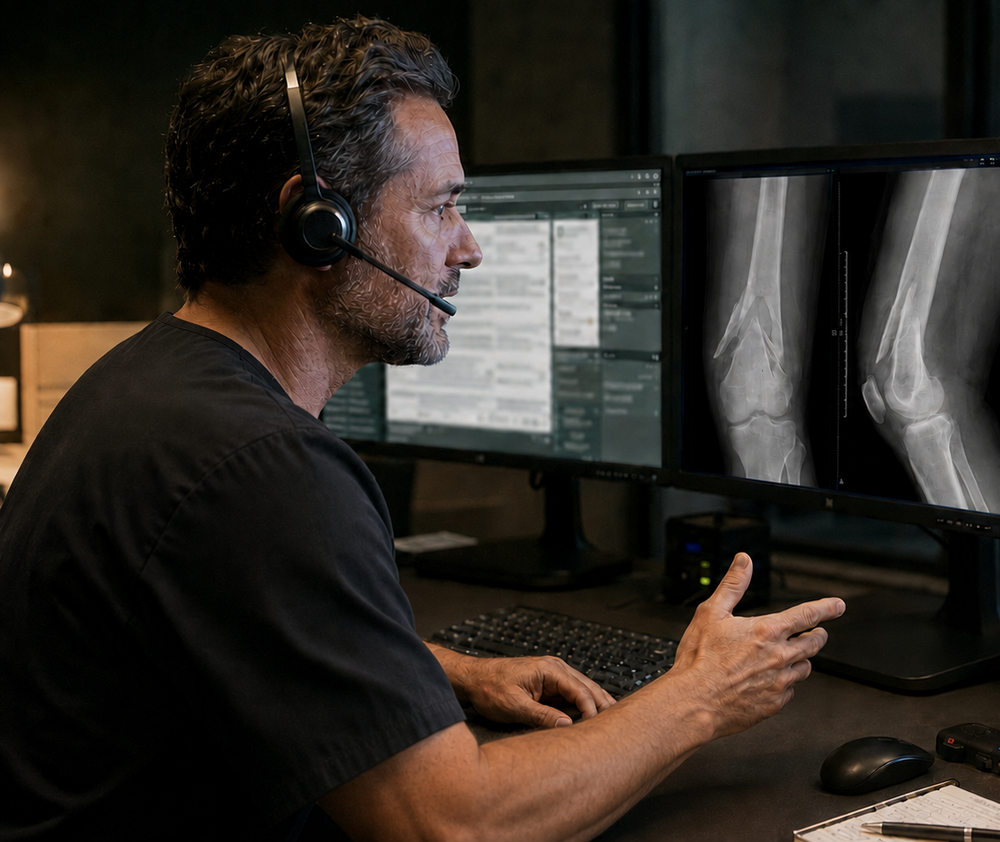
Tele-Mentorship: Extending (and maintaining) the Standard of Care
Not Medical Advice The following discussion is educational and is not medical advice. It does not imply a physician-patient relationship, nor is anything discussed herein intended to advocate for any specific medical treatment or...
Read Article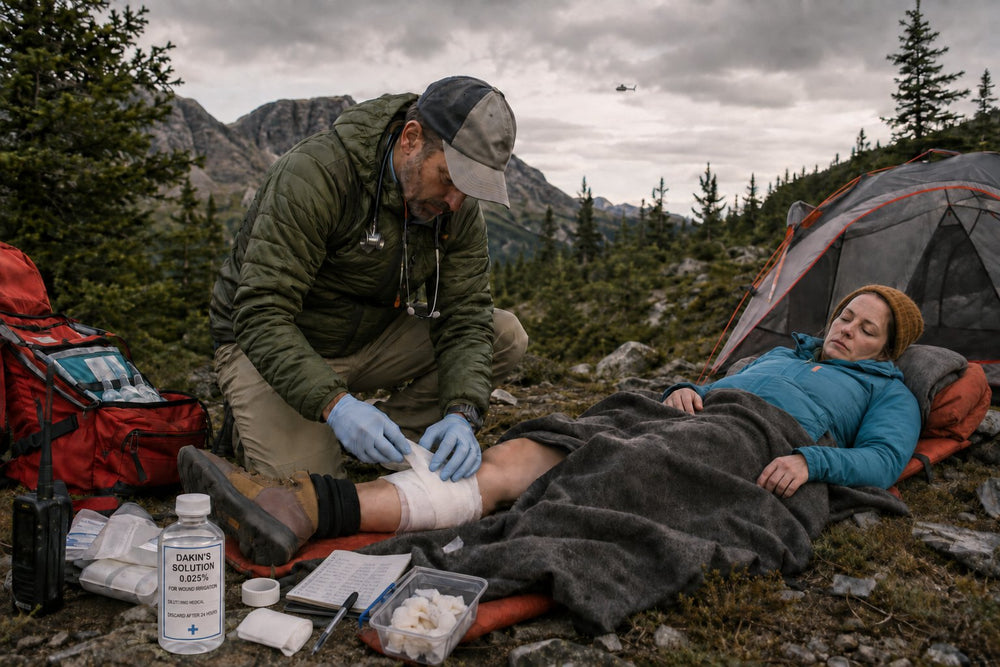
Wound Care in Austere Environments: A Framework
Cleaning, dressing, debridement, and Dakin's solution when evacuation is measured in days; a prolonged casualty care framework.
Read ArticleMedicine. Anywhere.
Austere Medicine Consultants brings hospital expertise and capability to the field. Explore physician-built kits engineered for the moments that matter.
Shop the Kits