


First Aid Field Pack (FAFP)
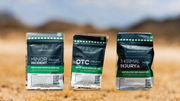
The Minor Incident Field Kit, the OTC Field Kit, and the Thermal Injury Field Kit, bundled as one complete first aid kit. Hospital-grade first aid supplies for cuts and lacerations, everyday ailments, and first- through third-degree burns. All sealed in durable packaging.
- Three complete FIELD KITS - the MINOR INCIDENT FIELD KIT, the OTC FIELD KIT, and the THERMAL INJURY FIELD KIT - in one package.
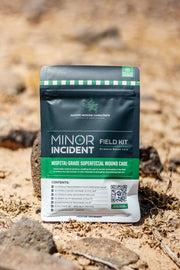
- Hospital-grade sterile dressings, gauze, and tapes for cuts, scrapes, and lacerations.
- Familiar over-the-counter medications for pain, fever, allergies, rashes, and stomach trouble.
- Burnshield® hydrogel burn dressing and gel packets for first- through third-degree burns.
- Physician-built, designed, printed, and assembled in the U.S.A.
What’s Included
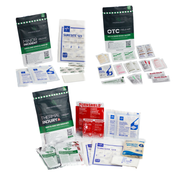
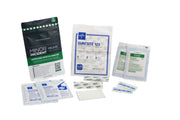
- Wound care (MIFK): sterile film dressing, gauze sponges, non-adherent pads, heavy-duty and waterproof bandages, silk tape, Splinter Out™ lancets.
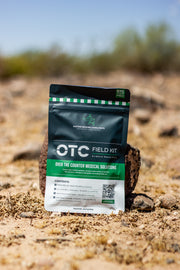
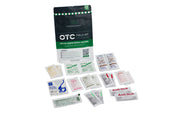
- Medications (OTCFK): ibuprofen, Tylenol (acetaminophen), diphenhydramine (Benadryl), oral pain-relief gel, sting relief, A&D Ointment, Calmoseptine, burn cream, anti-itch gel, alcohol pads, electrolyte, bismuth, and antacid tablets.
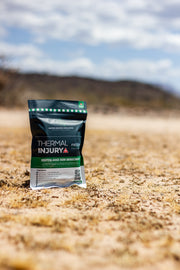
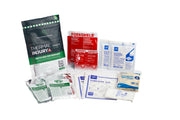
- Burn care (TIFK): Burnshield® hydrogel dressing and gel packets, triangular bandage, specialty gauze roll, non-adherent petrolatum dressings, sterile gauze pads, transparent dressings.
- Reference: pictorial and drug facts inserts in three resealable mylar pouches.
Understanding everyday injuries and ailments in the field
The Everyday Layer of Field Medicine
Most field medical problems are not major trauma or catastrophic illness. They are minor cuts, burns, or symptoms like a headache from dehydration. Handled early and correctly, each one remains manageable instead of ending the trip. ALWAYS SEEK MEDICAL CARE IF YOU ARE ILL OR INJURED IN THE FIELD.
Why wound irrigation matters
The medical literature supports irrigating wounds with copious clean water; U.S. tap water, sterile saline, or properly filtered and purified field water.¹ A jet or stream of water helps flush debris. For minor wounds, infection rates after thorough irrigation are low and topical antibiotics have not been proven to demonstrate improved healing or reduce infection rate.²
Stop, and be cool
If you burn yourself with a campfire or hot suppressor, STOP. Remove the source of heat. Stop the burning process and cool the injury with clean, potable, room-temperature water. NEVER USE ICE. Cooling early limits how deep the injury progresses. Wash with soap and water if available, pat dry, and cover with a hydrogel or non-adherent dressing to keep the wound clean and ease pain. If you’re going to use topical antibiotics, THIS IS WHERE THEY PAY OFF, but you are ok without them as long as you get to definitive care. For more information, see our FIELD NOTES dispatch, Thermal Injuries in the Field.
Medication as a Field Capability
Familiar over-the-counter medications, staged before they are needed, turn pain, fever, an allergic reaction, or GI distress from a mission-ender into a managed problem. A drug facts insert keeps uses, dosing, and warnings on hand.
- Moscati RM, Mayrose J, Reardon RF, Janicke DM, Jehle DV. A multicenter comparison of tap water versus sterile saline for wound irrigation. Acad Emerg Med. 2007;14(5):404-409.
- Smack DP, Harrington AC, Dunn C, et al. Infection and allergy incidence in ambulatory surgery patients using white petrolatum vs bacitracin ointment: a randomized controlled trial. JAMA. 1996;276(12):972-977.
This information is educational. It is not medical advice and does not establish a physician-patient relationship. Always seek professional medical care, and train on these skills before you need them.
How to use the First Aid Field Pack
This pack contains professional-grade medical supplies to treat wounds, everyday ailments, and burns.
Assess the Situation
Decide what you are treating: a wound, a burn, or a symptom. For heavy bleeding, trouble breathing, or a large or deep burn, render the appropriate first aid and activate EMS (call 911) and move toward definitive care.
Clean and Irrigate
Wash or sanitize your hands. Clean wounds with purified water or reliable U.S. tap water, using a jet or stream of water to flush out dirt and debris.
Cover the Wound
Choose the appropriate dressing — film dressing, non-adherent pad, gauze, or bandage — secure it with the silk tape, and keep it clean and moist, but not wet.
Stop, Cool and Cover Burns
For thermal injuries, remove the heat source, cool the area with clean, room-temperature water, never ice. Wash with soap and water if available. Apply the Burnshield® hydrogel dressing or gel, then cover with a non-adherent or transparent dressing. Seek or enable rescue by definitive care.
Treat Symptoms and Reassess
Use the enclosed over-the-counter medications per their drug facts for pain, fever, allergies, or stomach trouble. Change dressings daily and move toward the next level of care as soon as possible.
This content is intended as educational material only. It is not medical advice, nor does it constitute a physician-patient relationship. There is no substitute for training. If you are not a trained medical professional, start with Red Cross First Aid training. Always follow the manufacturer’s instructions for each component.
Who the FAFP is for
The FIRST AID FIELD PACK is built for anyone who works, lives, or plays far from a hospital, pharmacy, or doctor. Literally anywhere humans go, Austere Medicine Consultants and AMC Medicine LTD let you take medical capability with you. That’s MEDICINE. ANYWHERE.
Why preparedness matters
Cuts, burns, and trail tummy don’t check your itinerary before they strike. In the minutes after they happen, the people already on scene make the difference — but only if the right supplies are within reach.
The FAFP stages a complete med kit built by doctors with the same hospital-grade wound care, familiar medications, and burn supplies THEY carry. Packaged in sealed, grab-and-go pouches. And vetted by AMC’s staff of Special Forces and Ranger Regiment medics. With AMC, your home, vehicle, or call-out kit is prepared with basic medical capability.
Add to Cart — $49.99What’s inside the pack
| Minor Incident Field Kit (MIFK) — Wound Care | |
| 1× | Sterile Transparent Film Dressing 4″ × 4.8″ — breathable, waterproof cover that seals a wound while letting you keep an eye on it. |
| 2× | Sterile Gauze Sponge (12-Ply) 3″ × 3″ — for cleaning, absorbing, and padding the wound. |
| 2× | Sterile Non-Adherent Pad 2″ × 3″ — covers the wound without sticking to it, for easier dressing changes. |
| 2× | Heavy-Duty Bandage 0.75″ × .75″ — durable adhesive bandage for small wounds. |
| 2× | Waterproof Bandage 1″ × 3.25″ — flexible, water-resistant cover for active use. |
| 1× | Silk Tape 36″, specialty packed — secures dressings and gauze in place. |
| 2× | Splinter Out™ Lancet Sterile lancet for removing splinters and small foreign objects. |
| OTC Field Kit (OTCFK) — Medications | |
| 7× | Pain and Fever Relief Ibuprofen, Tylenol (acetaminophen), and oral pain-relief gel packets. |
| 11× | Allergy, Rash, and Burn Care Diphenhydramine, sting-relief pads, A&D Ointment, Calmoseptine, burn cream, anti-itch gel, and alcohol pads. |
| 6× | Gastrointestinal Support Electrolyte, bismuth, and antacid tablet packets. |
| Thermal Injury Field Kit (TIFK) — Burn Care | |
| 1× | Hydrogel Burn Dressing 4″ × 4″ Burnshield® sterile trauma hydrogel dressing — cools, soothes, and covers the burn. |
| 2× | Hydrogel Burn Gel Packets 3.5 mL Single-use Burnshield® hydrogel for smaller burns or topping up a dressing. |
| 1× | Triangular Bandage 40″ × 40″ × 56″ Secures dressings or doubles as an arm sling. |
| 1× | Specialty Gauze Roll 4″ × 72″ Conforming roll to wrap and hold dressings in place. |
| 2× | Non-Adherent Petrolatum Dressings 3″ × 9″ Won’t stick to the wound — gentle removal during dressing changes. |
| 2× | Sterile Gauze Pads 3″ × 3″ Sterile pads for cleaning, padding, and absorption. |
| 2× | Transparent Dressings 4″ × 4.8″ Breathable film dressing that protects while letting you monitor the wound. |
| 3× | Instructional Inserts and Mylar Pouches Pictorial burn guide with the Rule of Nines, suggested-use wound-care insert, and drug facts insert — each kit sealed in a durable, resealable mylar pouch. |
Three resealable, mylar-sealed pouches, each approx. 5″–6″ × 8″ · Combined weight approx. 8.7 oz · Designed, printed, and assembled in the U.S.A.
Why we created the FAFP
The team behind Austere Medicine Consultants and AMC Medicine LTD has spent years working in environments where the nearest hospital and doctor were hours, or even days, away. In some places, these didn’t exist at all. Current medical practice contributes to our ongoing refinement of everything we offer. This experience and strong shared values mean prioritizing the needs of you, our patients, and our customers.
AMC feels everyone should have access to real medical capability for the problems that actually happen — the cut, the burn, the fever on the road — while maximizing value. The FAFP pairs the MIFK, the OTCFK, and the TIFK so the everyday layer of field medicine is staged together: field medicine, built by doctors, for the kind of person who refuses to be a liability. The Professional Prepared Citizen; who shows up competent, prepared, and an asset to their community. That’s who we build for. If that’s you, you already belong here.
Field Reports from Our Customers
Explore our other Field Kits
Frequently asked questions — FAFP
What’s inside the First Aid Field Pack?
What does the FAFP treat?
Why buy the bundle instead of the kits separately?
What makes a good first aid kit for home, vehicle, or travel?
Will it fit my pack, first aid bag, or glove box?
Can I take it on a plane?
Do I need a prescription?
When should I seek medical care?
Gear Is Half the Equation
We can’t all be neurosurgeons — but everyone can get quality First Aid and Stop the Bleed training. Pair your kit with the skills to use it.
The American Red Cross and ACS Stop the Bleed are independent organizations and are not affiliated with us.
One pack. The everyday emergencies.
Cuts, everyday ailments, and burns are manageable when the right tools are on hand when you need them.
Drop the FIRST AID FIELD PACK into your home, vehicle, boat, or carry-on and have a complete emergency first aid kit staged the moment it’s needed.
Single option · No prescription required · Ships within 2 business days